Posts Tagged ‘entrepreneur’

Startup memes and quotes, used to motivate and inspire, have flooded coworking spaces, home offices and social media feeds. So much so that they have spawned startups of their own.

I’m looking at two ‘startup quotes’ right now. Einstein’s “insanity is doing the same thing every day and expecting different results” and the slightly tacky but still meaningful “life is short, do stuff that matters”. So no, I don’t think all startup, self help or motivational memes are stupid. I think many can serve as a great reminder of core business building and life living principles that help keep people focused on the bigger picture in both business and life.

Having said that though, there are a lot of memes out there that induce a “do you mean to tell me that…” response.

Here are two of my ‘favourites’…

Image

Done Is Better Than Perfect

So you mean to tell me that a product which has flaws but is ‘ready to ship’ is better than a perfect product (which by extension, is also ready to ship)? If they are both ready to ship, I’ll take the perfect product any day, whatever perfect is.

I am a huge advocate of getting sh*t done and the lean startup philosophy of build, measure, learn.  While the meme can easily be interpreted by those in the know to mean this, it can also be misinterpreted and can form the foundations of a culture which builds crappy, half baked products.

What it is trying to say: For the purpose of testing a hypothesis, a project which has flaws but allows you to reliably test a hypothesis is better than a perfect project which takes you considerably longer to build.

Image

Costs Are Like Fingernails, You Have To Cut Them Constantly.

You mean to tell me that I should throw a blanket over all of my costs and just keep cutting them? What if some of those costs have shown to generate a very positive ROI. What if increasing those costs will actually increase sales and profitability? Sure, I get it, you need to constantly review costs and optimise your spending. But we can not look at costs as being detrimental to the business success as this meme suggests. Costs are a part of business. Costs are enablers.

What it is trying to say: We should constantly review costs to ensure we are getting the most bang for our buck.

So which startup memes do you at first think are cool but shortly thereafter start questioning?

Image

We’re now over two weeks into the new year and 29% of resolutions would have already become unstuck, according to research carried out by StatisticBrain.

Almost half of us usually make new years resolutions only for 92% to fail by year end.

Why do we fail at something that means so much to us? We evidently feel that the changes we make will make us better people. Whether that be financially, physically, emotionally or professionally, we make new year’s resolutions because we know that we could be better at certain aspects of our lives (we can always be better!).

In the chaos of the festive season, we quickly forget about everything that held us back during the previous year and pledge that the new year will be different. Just as every new day begins with the promise and excitement of possibility, only to end with parking oneself in front of the television, anxious about the next day’s meetings, the dawn of the new year also presents unrelenting possibility. So it stands to reason that our early optimism drives us to create bold goals and set the bar high, which is absolutely what we should be doing.

Why then do most resolutions fail?

One pertinent reason is the fundamental roadblocks, or ‘disablers’, that stopped us from being awesome at said area for improvement up until that point. Perhaps you didn’t have time to go to the gym (that one is often a poor excuse rather than a fact). Maybe your hectic travel schedule prevented you from getting into the habit of regular yoga classes. You said “yes” to too many new projects at work resulting in long nights and weekend work so you didn’t spent much time with your family. You didn’t perform as well as you would have liked in the office because your sleeping patterns and diet are all over the shop leaving you spent by the early afternoon. Or maybe you just have a bad attitude that needs refining.

In the above cases it is all well and good that we say we want to get fit in 2014, spend more time with family or become the office Superman (or Wonder Woman), but if we don’t change the underlying behaviours and disablers that prevented us from being these things in 2013, then all of the wishing and trying in the world won’t help us.

Once you’ve identified what you want to change, you should consider prioritising. Do we really want to get fit or do we actually prefer sleeping in an hour in the morning? (n.b. I don’t personally advocate not working out in favour of sleep).

Maybe there are other resolutions we could make that we’ll actually keep where the enablers and disablers are more likely to result in the achievement of our goal. Ever wanted to learn a language? Maybe you can use Duolingo for 20 minutes a day during your morning commute to work? Time? Work? Sleep? Money? None are an issue here. A perfect example of how actually thinking about your resolution before you make it can help you achieve it.

Some may say that this is a somewhat lax approach to resolutions, and right they may be. If you really have set your sights on the grand ol’ resolution of losing weight and getting fit and your disablers were many while your enablers, the things that help you achieve your goals, were few and far between, then you will have to influence them.

Perhaps you can get more time by using apps such as the ever popular efficiency apps and enablers such as Evernote, 30:30 or Buffer.  Perhaps you can learn to say no to jobs, work more effectively by having a focus on what actually adds value and not sweating the small stuff.

Spending too long on the morning commute? Perhaps you can negotiate working remotely or closer to home using a flexible office platform like HotDesk?

Overwhelmed with tasks and errands? Consider outsourcing creative tasks through Freelancer or everyday errands through Airtasker. If you’re not outsourcing, chances are you’re wasting time doing what someone else can do for a fraction of the cost. Not only that, but it’s time you could better spend on said resolution.

You could get better at saying no to new projects when you’re already overwhelmed or delegating tasks more diligently in the office. Perhaps you can get a better night’s rest by staying away from the internet for an hour before bed to help you get up for that morning trip to the gym? Whatever your impediments, there’s a ton of ways they can be overcome.

So before you break your resolution, identify your disablers, determine how they can be overcome, and get to work becoming one of the 8% of people who successfully achieve their resolution.

Confronting. That is how I felt waking up one sunny Monday morning in an inner west suburb of Sydney.

On the surface of it, this was just like any other Monday morning. The Sydney traffic was doing its very best to slowly steer those game enough to drive into insanity. Railway stations and bus stops were full of people either seemingly in the process of waking up or recounting stories of their weekends. Cafes were buzzing with activity as commuters sought their pick-me-ups ahead of a another work week ahead. And me? Well, I had nowhere to go.

You see, after juggling the demands of full-time work with my startup, shared office space platform Hotdesk.com.au, for almost a year, I found myself in the very privileged situation of being in command of a generous sum of funding and the liberty of focusing purely on Hotdesk for at least a year. I had often preached to anybody who’d listen that if I had the time and the capital I would take the business to grand heights but the time constraints of working at a global investment bank and budgetary challenges of bootstrapping made it all too difficult.

Well, now I had not only the time but also the capital to play with, and it left me feeling like a stunned wide-eyed deer staring into the headlights of an incoming truck – the truck in this case being external pressures of social and professional judgment. While we like to think of family and friends as ever supportive, thoughts of failure and the subsequent loss of respect come bubbling to the surface. We fear not being attractive to the opposite sex. We fear becoming financially insecure. We fear the lack of consistent income. We fear becoming less employable and lastly, and perhaps the most tangible and legitimate fear of the lot, we fear not being able to repay those who have put their hard earned cash on the line, exercising a vote of confidence and belief in our abilities to commercialise an early-stage venture.

We ask questions of ourselves when we see others making their daily commute to a place of gainful employment. Are we just being lazy chasing these entrepreneurial dreams? Is it because we don’t want to ‘work work’. Is it because we have an issue with authority? Are we just dreamers?

Indeed, while having the opportunity to run your own show for a year is a gift and one I wouldn’t change for anything, the weight that comes with it is exponentially heavier and it takes a certain kind of person to embrace the opportunity head on and awaken every day with newfound vigour and energy.

In my case, maintaining some sort of routine synonymous with how I had approached my working week up until that Monday morning was something I knew I had to do. Waking up at 5:30am to hit the gym would not only set structure to my day but would get the cognitive juices flowing, putting me in a good mental space to hit the ground running in the office.

Next up, commuting to a place of work was just as important. While working from home sounds nice and may have many merits, it is often not the most productive of locations for a number of reasons. It is not associated with work time but rather with leisure and rest time so getting ‘into the zone’ doesn’t come naturally and requires a lot of discipline. Second, the process of commuting to a ‘place of work’ gets many people shifting focus and finally, taking up residence in a shared coworking space, where other likeminded entrepreneurs are gathered, provides the perfect environment to not only get some work done, but to network, collaborate and share the journey.

I found that while my days previously consisted of nine or so hours on my day job followed by four or so on Hotdesk in the evening, I was now doing just as many hours scattered  throughout the day, only with one difference – it didn’t feel like work. While I was liberated from being tied to my desk for a predetermined stretch of hours, I was spending more time at it, but it was by choice and it was being fuelled by passion for what I was doing. Unlike most full-time gigs which are based on the supposition that all people are exactly the same and are most productive and effective between the hours of 9am and 5pm, I could take off and go for a run or a walk or anything I desired if I wasn’t ‘feeling it’ and could come back to it later when I was inspired, not when the clock dictated I was good to go.

I am an advocate of Timothy Ferris’s theory on ‘work for work’s sake’ and that we often fill our work day with monotonous, non value-adding tasks in order to feel like we’re working. There is no greater waste of time, which, in our very short lives, is precious.

On effective use of time, it is incredibly important to have some sort of plan of attack to not only your day but also your week and month. What are you looking to achieve? What will help you get there? A list of not only tasks to complete but a well prioritised list based on a sound forecast return on investment is critical. Don’t sweat the small ‘work for work’s sake’ stuff and focus on the important stuff, the stuff that is often the hardest. Find out when you’re best at hitting the hard yards, eliminate interruptions and allocate a few hours of focus towards it. For many, this will be first thing in the morning. Diving into the easy stuff first may put you at risk of getting into a lazy zone which can be difficult to come out of so try to get into a habit of doing the hard stuff first.

While the initial feeling of confrontation was still with me by the Wednesday, the culmination of each day brought with it slightly more sense of control. I was going to bed satisfied and was kicking more and more goals each day now that I had the time to execute on the strategies I had up until this point recorded in spreadsheets ‘to do’ when time and money permitted.

Now in my second week I am under no misconception that I am all over this new way of working. I have a lot to learn about managing my new day to day effectively and balancing it with my social life and relationships outside of the business, but one thing I’ve come to appreciate already is that startup life is about the journey, the moment you focus too heavily on the destination is the moment you draw ever close to throwing in the towel for lack of immediate results.

Embrace the ride, the ups and downs and taking something away from every moment. Chances are, the personal and professional development that comes with building and running a business will not only get you more respect from your peers, make you more attractive to the opposite gender and increase your employability, but for those lucky and hardworking enough, it just may deliver rewards to repay not only your investors but yourself in spades.

Add me on Google

Image

Thick rimmed glasses, fixed gear bicycles, skinny jeans rolled up to just below the knee, boat shoes, vegan diets. Okay, you got me, I’m talking about hipsters. Or am I?

You’ve probably noticed the convergence between hipster culture and local start-up culture so let’s explore this.

There was a time when counterculture was exactly that – counter to the mainstream culture. However, the hipster movement, along with its ironic moustaches, flannel shirts and skinny ties, is now nothing short of cross culture.

Which teenage episodes lead to one becoming a hipster? Is it being picked on at school? Is it not being able to get laid? Is it having little to no athletic ability? Or perhaps it comes with the territory of studying the Arts? Okay, that was uncalled for.

Anyway, the seemingly inherent desire to adopt a cynical attitude and look down upon and denigrate everything that the mainstream (whatever that is), adores, perhaps comes down to deep insecurity.

The Hipster Handbook suggests that the hipster sees working as a necessary evil, “reserved for the masses by of which by definition the Hipster is not a part”. By extension, it makes sense that many such hipsters would turn their noses up at the traditional convention of working for the man and look to start their own business where they and they alone can dictate terms.

Is this because they have truly awesome ideas and have the competencies, work ethic and personal attributes to really make a difference? Or is it simply because it suits the hipster image? Maybe it’s just because those who can’t do, start businesses. Whether they succeed or not is a totally different matter.

We all know somebody who perhaps doesn’t or hasn’t performed as well as they’d like in a corporate environment. Maybe they didn’t get that promotion or raise, but instead of looking inwardly at themselves, they’ve searched externally for validation. “Oh, I’m just doing this until my business takes off” we’re told. Another classic is “I don’t care about this job anyway”. Heck, they both might be true.

We’ve all felt that way at some point – we just haven’t made a lifestyle out of it.

In many cases, the words may be coming from somebody who is essentially scared to fess up to the fact that maybe they’re just not good enough.

How does one cope with the sudden realisation that they suck?

They console themselves by dreaming big about some start-up dream where they are not measured by anybody’s yardstick but their own, buoyed by images of Steve Jobs eating apples all day long, while taking part in the counter-culture and staying true to their zenergised hipster roots!

Where am I going with this? Well, only 4.8% of Aussie start-ups reach the point of scaling, according to a 2012 Start-up Genome report. Sure, things like funding, geography, poor investment incentives and corporate red tape may play a part, but I wonder what that number would be if you took out all of the start-ups that lack imagination, all of the start-ups that exist purely to appease somebody’s sick overblown perception of their own self-worth and place in the world. I’m talking about start-ups that are going nowhere from day one.

I have no doubt that the success rate would be much higher.

Not only for the fact that we’d be working with a larger number of successful start-ups relative to the entire pool, but because start-ups with merit would also be less likely to be discouraged and more likely to be discovered with less self-serving ideas floating around…and there is a LOT of rubbish. Over 1.6 billion apps created for iOS and Android platforms can’t be wrong!

So the point here is not to bash hipsters or the counter culture. Counter culture is in fact essential as genuine counter culture is embodied by people who think outside the square and deviate from the norm. Without pushing boundaries and asking questions of the status quo, the human race will cease to progress, evolve and innovate.

However, counter culture for the sake of counter culture defeats the purpose as it essentially becomes about conforming and if you want a case study on looking exactly like everybody else, look up the Democratic People’s Republic of Korea.

The point is not to let a figure like 4.8% of Australian start-ups scaling put you off. If you have a great idea and the competencies, business acumen and strong work ethic required to effectively execute, then you are much more likely to succeed than the lowly figure suggests.

Ironic moustache optional.


Image

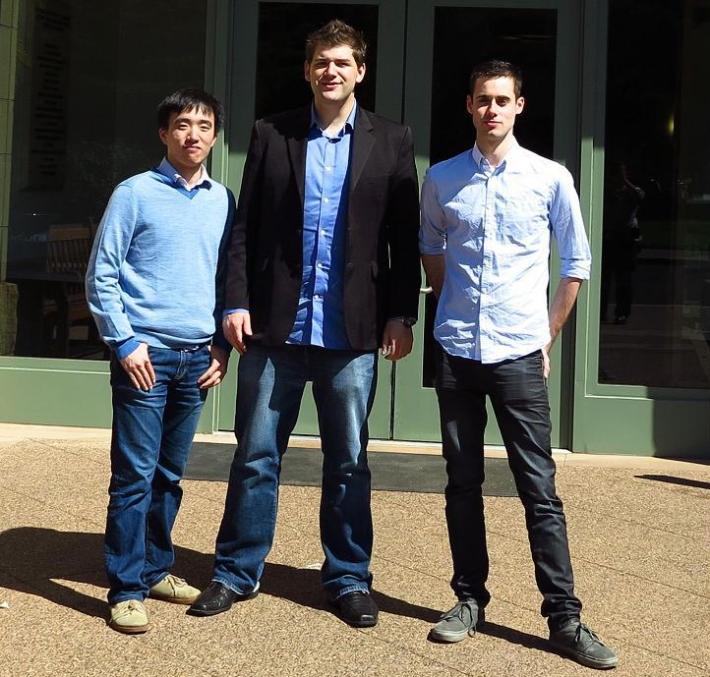
Melbourne-based 121Cast, founded exactly a year ago in February 2012, have been making waves with the release of SoundGecko.

The brainchild of Long Zheng (24), Andrew Armstrong (26) and Ed Hooper (27), the app that lets you listen to any website and article on the go, whether on a website or smart-phone. It also allows you to synchronise with your Dropbox for easy listening later.

While one might be forgiven for thinking that the founders of the Melbourne based 121Cast might have faced some challenges based on their age, Ed Hooper, who we caught up with, insists that that this was never an issue due to their previous involvement in successful start-ups.

Long created istartedsomething.com at the tender age of 17, a blog about Microsoft technologies that went on to reach over half a million hits per month. The feather in Andrew’s cap was the design of Telstra’s Bigpond Music website while Ed had been involved with several start-ups including rome2rio and SOAK.

Riding this wave of momentum, SoundGecko, the beta of which was launched in mid-2012, has gone on to attract more than 75,000 users and the attention of Melbourne’s Adventure Capital and Innov8, the seed funding partnership between SingTel and Optus.

121Cast was the first Australian start-up, along with VenueMob, to receive investment from seed program Optus-Innov8 back in November. Optus-Innov8, which represents a partnership between SingTel and the Australian telco, also opens doors to mentorship and gives 121Cast exposure to both telecommunications networks huge subscriber base.

Ed tells us that the three key factors that got them on board with Optus-Innov8 were the traction of the existing SoundGecko beta, strong strategic alignment with both Optus and SingTel and the quality of the team, who, as indicated earlier, are no newbies to the start-up game.

While it is true that time poor people might prefer to quickly skim articles and extract only what’s relevant to them (as opposed to listen to an entire article,) SoundGecko affords the same time poor people the opportunity to listen to articles and stay on top of things when they usually can’t read – in the car, on a morning jog, while walking to a client site or perhaps when preparing dinner…

The width and breadth of opportunity presented by SoundGecko also saw 121Cast get green-lighted for a place in the Melbourne Accelerator Program (MAP), the University of Melbourne’s new program set up to assist start-ups with a connection to the University, be it as existing students or alumni.

“Being part of the MAP was a fantastic opportunity that I would recommend all start-ups with a connection to the University pursue”, says Ed. “One of the benefits that I really found helpful was connecting with alumni who gave us advice on key challenges our business was facing.”

The first iteration of the program turned out to be more successful than anybody anticipated with two teams raising investment and one winning a competitive award (out of four in total).

It no doubt helped that the trio have a strong connection to higher learning, having completed degrees and courses at Stanford University and the universities of Monash and Melbourne. While the high college drop-out story is a popular one with tech start-ups, Ed feels that in his case, university was very useful on his start-up journey and gave him great insights, experience and connections. However, he maintains the choice of whether to study or not depends on the individual.

“Hungry entrepreneurs should focus on which of the opportunities available to them will provide the best learning experiences. For some it will be study and for others it will be a hands-on opportunity.”

Despite what appears to be an impressive run of good fortune, built on a foundation of hard work, start-up life has not been without its challenges for the young trio.

“The technology behind our platform is very complex which made it really hard to create an accurate prototype quickly.” This was a primary reason for releasing the SoundGecko beta, says Ed.

In addition to wrestling with technology, a lifestyle shift also presented challenges. “Transitioning from high paying salaries to living off our own personal savings was a tough change to make. We all agreed that the team and idea were solid and that going all out was the best way to move forward which meant quitting our jobs. After raising two rounds of capital we’ve started paying ourselves however the amount is very low to cover basics like rent and food.”

The aforementioned high paying salaries came in enterprise at the likes of banking behemoth ANZ and it no doubt took a lot of courage to leave the security of a salary behind and roll the dice on a business idea.

Ed says that the fast pace of start-ups, working on a broad set of tasks and being in control of his destiny are what attracted him to entrepreneurship and got him to graciously jump off the corporate ladder. “When I worked in Corporate at ANZ, I was exposed to great projects but got frustrated that they took years to implement and were controlled by politics”, says Ed.

Demonstrating the foresight of many a successful entrepreneur, he laments that “I still to this day remember getting chewed out in late 2009 for saying Android was going to be huge and that we needed to start working on a personal banking app right away”.

Sure enough, fast forward four years and banks are now jostling for position in the Android (and iOS) markets, on a quest to provide the best integrated online and mobile user experience.

It’s blatantly obvious to anybody who has seen the 121Cast team present, such as at the recent Innov8 seed funding information session at Melbourne’s York Butter Factory co-working space, that they all have distinctly different personalities. Ed sees this as a positive. “We all have our own perception on things which makes the collective stronger. It also comes in handy as some tasks are performed better by certain personalities”.

Like most, when pressed on the threats and challenges facing Australian startups, Ed sees funding as the number one hurdle. “Australians (are) moving off-shore because they are unable to locally raise capital or do not view Australia as a viable location for starting a company”.

These hurdles have hardly stopped 121Cast from chasing their dreams though, and if the performance of a company still in its relative infancy is anything to go by, we should be hearing a lot more from them in the coming months and years.

Could the SoundGecko widget become a staple on websites, right next to Facebook, Twitter and LinkedIn share buttons? Maybe, but the trio have loftier ambitions.

121Cast ultimately seek to redefine the radio with personalised information and entertainment for all. Imagine turning on the radio, hearing about how your stock portfolio has performed, listening to news that directly relates to your interests and profession and then banging out a brand new track from your favourite artist? I’d tune into that.

To find out more head to www.121cast.com

Key learnings

 1.     Traction in the shape of existing customers (preferably paying ones), a quality team and strategic alignment are almost critical to being considered by serious investors

2.     Entrepreneurs should focus on the best learning opportunities available to them, whether study or hands-on experience opportunity.”

3.     Start-ups should pay themselves only a modest salary to ensure funds are invested in the growth of the business and its founders stay hungry

4.     If feasible and you truly believe in your idea and team, consider quitting your day-job so you can focus on your start-up fulltime (lifestyle shift imminent!)

5.     Don’t let geography, funding or age limit your ambitions, actions or success

6.     Different personalities provide different perspectives and can help drive business forward

7.     Overcome technology hurdles by focusing on lean functional versions and subsequently make iterative improvements

8.     Be aware of and seek out start-up programs that are available to you

9.     Seek mentorship (121Cast receive formal advice from Adventure Capital which brings experience and expertise to the table that the core team doesn’t have)


Image

Back in 1988, Flava Flav – the clock-necklace adorned, self-proclaimed ‘hype man’ for legendary hip-hop group Public Enemy – told us not to believe the hype. He was having a go at the media and critics in light of the group’s negative press. He could have just as easily been referring to the mobile apps of a quarter century later.

Dave McClure of 500 Startups seems to agree, lamenting that “people spend too much time working on stupid fucking apps that don’t make any fucking money” at his recent talk in Sydney.

According to Appsfire’s A Year in the App Store review, 339,164 apps were released in 2012. Now, compare that to the number of apps in your phone. Hmmm… that seems like a lot of stupid fucking apps that don’t make any money. Making matters worse, the study found that only 34% of these apps were paid apps.

The problem with these apps is a lack of staying power. Media need something to write about and often get stuck writing about some ‘next big thing’ app that essentially is nothing more than some basic business model innovation that doesn’t drastically improve or even remotely improve your life.

Such apps have no real value proposition. Any successful startup has a value proposition. Does the business serve to satisfy a need that nobody else does? Does it create gain or eliminate pain for its customers? Does it solve problems? App designers should subscribe to the same common business principles before wasting time and money on development. Deloitte’s recent Silicon Beach report also concluded that only 4% of Aussie start-ups scale and with too many trigger happy app designers out there it’s not hard to see why.

Recently, Erli Bird promoted Fitsby, an app that allegedly “motivates you to go to the gym”. Granted, the app has not been released yet and is subject to iteration, but it is essentially an app which subscribes to gamification theory and pits gym-goers against each other in a quest to ‘check in’ at the gym and stay there for at least 30 minutes. Winners will supposedly win cash prizes or mere bragging rights.

Well, let’s think about this. If you’re an avid fitness enthusiast chances are you won’t need this app nor will you like it. If you are one of those people that really needs motivation to go to the gym (cause, you know, health, fitness, confidence, mental and sexual performance aren’t enough motivation), then perhaps you will give it a go. Suppose you do give it a go and you become the local resident gym junkie – awesome! Would you still use the app? Chances are your new habit will take care of itself. And if it doesn’t keep you motivated? Either way, long-term user retention is a fat chance from day one. Not to mention a quick search for “fit” in the iOS App Store generates 961 results.

Does checking-in at the gym mean you are actually working out? You could be tuning into an afternoon episode of Young And The Restless while walking at a 5km per hour pace on the treadmill for 30 mins, burning a total of 200 calories. A large skinny latte afterwards and you’re back where you started. Maybe integrating the app with a calories burned monitor would make more sense. But wait, there’s tonnes of apps that allow you to record and upload your calories burned – Garmin Fit, Nike+ and MapMyRun to name but three. Oh, and how many times do you get those annoying Facebook status updates of friends checking in at the gym, complete with gloat? Nothing new here people.

And therein lies the challenge – credit to people for having a crack and trying to take control of their own destiny but so much has already been done. If your app doesn’t genuinely serve a game changing purpose for a particular market, it’s unlikely to make you any real money.

We need apps that will make a real difference in our lives. Having not used a smartphone until 2010 (I don’t consider the Nokia E71 smart!), it totally changed my life. However, it wasn’t some flash in the pan app that did it, it was note-taking, calendar, e-mail, maps, news, reference and learning apps, social networking apps, banking apps, high quality photos and synchronisation …not check-in contests.

Life’s short, do your homework before you waste years of your life on some app or start-up idea that doesn’t solve any problems or has a scalable, long-term market.

By Steve Glaveski

@steveglaveski

Add me on Google

Start-ups left behind in the Asian Century

Image

Innovation. It was the undisputed battle cry of the year. Looking back, the Asian Century whitepaper was one of the biggest talking points of the year.

Big business and start-ups alike have become overly liberal with their use of the term and encourage relentless innovation and disruptive thinking every chance they get.

However, big business is fraught with bureaucratic structures and established procedures, while the large accounting and legal services firms are shackled by the chains of their core product offering.

It is the lean start-up that has the most room to move and treads the most fertile ground, primed for not only innovative thinking but also for action. Action to turn this thinking into something more than a few multi-coloured marker squiggles on workshop paper or self-serving ideas captured on company web-pages that resemble something from one of the many DIY Geocities sites of the 90s.

The Asian Century whitepaper was supposed to be the Australian Labor Party’s landmark answer to the emerging economies of Asia, particularly that of China, Japan, India, South Korea and Indonesia. It was to be our roadmap and response to the fact that within only a few years, Asia will be both the world’s largest producer and consumer of goods and services.

Yet this whitepaper, like many a corporate boardroom spiel, company-wide email and end of year junket, indiscriminately played the innovation card. In fact, ‘innovation’ was littered throughout the report no less than 90 times. So what does this mean for Australia’s innovative thinkers, creative types and fledgling start-up scene? Sadly, not much.

This 320 page document included an entire four, count them, four paragraphs dedicated to ‘supporting financing for innovation’. And while these four paragraphs touch on some existing initiatives such as the Commercialisation Australia (CA) grants and the Clean Technology program, there’s little by way of forward thinking or new incentives to support what Deloitte Private partner Josh Tanchell refers to as Australia’s greatest natural resource, entrepreneurs.

These fluffy paragraphs would not be out of place in the plush teddy section at Toys R’ Us, right there next to Tickle Me Elmo, or maybe one of the Care Bears, I haven’t quite decided.

The CA grants, while a commendable initiative, are a dollar for dollar incentive, and therein lies the reason why uptake of the grants is so low. Deloitte’s recent Silicon Beach report found that only 21% of Aussie start-ups accessing grants were doing so through CA. Getting a start-up off the ground is difficult stuff and having to front 50% of your start-up costs is no easy feat, particularly if taking the gamble and committing to projects on a full time basis on a stomach full of Maggi noodles, without a steady stream of income.

The fact is that while a full-time job can help fund your start-up, it can also hinder its progress and in a fast moving climate where first to market often wins, the inability to focus all of your creative juices on a single project can hinder progress, sacrifice results and ultimately discourage having a crack.

It’s hard to imagine having a red hot go while working 40 hours a week. This does not even take into account the often overlooked late nights, weekends, domestic duties and other social and family commitments. Yes, it is difficult to see any other reason why uptake of the CA grants is so low other than the fact that it is a dollar for dollar initiative.

Lean start-ups today are finding it easier to get out in the real world and test their ideas through enabling technology platforms such as crowd-funding, crowd-sourcing and a slick application of bootstrapping. But when it comes time to scale, Australia is skating far behind the United States and with all things remaining constant, nothing other than a Steven Bradbury-esque slip up on the part of our Monday night football loving peers will see us closing the gap.

Deloitte found that in the US, comparable companies raise 4.8 times more capital than Australian companies in early stage investments raise and an astronomical 100 times more capital when ready to scale. Scratch that previous comment about Steven Bradbury, at least he was in the final race, we’re struggling to bust out of the heats at this rate.

To add further insult to injury, the red tape island we call home stings those who open their wallets to start-ups with capital gains tax, makes selling company equity notoriously difficult and often restricts bidding for government contracts to ASX 100 listed companies.

Australia must do a lot more to incentivise investment in start-up companies and consider additional tax breaks and the lowering of red tape, particularly with respect to employee stock ownership plans (ESOPs).

The lack of foresight shown by the whitepaper is quite disappointing considering wealth of start-up activity in Australia. We have a wealth of co-working spaces including Hub Melbourne and Sydney, Sydney’s Fishburners and the nation-wide Jelly spaces to name but a few as well as programs and funding platforms such as Pushstart and the fast growing AppVillage through to Starfish and Blue Chilli.

While these platforms are helping to provide some relief, they could do with a hand from the policy makers.

The Global Entrepreneurship Monitor this year found that more than 10.5% of Australians are engaged in some sort of entrepreneurial activity and one would not be wrong in assuming this number to be much higher under different conditions.

Having said all of this, we aren’t short on start-up success stories when you consider Jetts Fitness, BigCommerce, Shoes of Prey, UberGlobal and enterprise software poster child Atlassian, but this success is in spite of the funding climate. A more robust funding climate would inspire new heights of innovation, rather than just get the conversation started, generate economic growth and place us in poll position, not only geographically, but strategically, to take advantage of the Asian revolution.

Gillard’s whitepaper is to start-ups what Charles Darwin’s Theory Of Evolution is to the faithful and the underlying message is one which tells aspiring entrepreneurs, in no uncertain terms, that if they want to access the capital required to give their ideas wings, then they should knock down a can of Red Bull and start packing their bags…and take their money spinning and job creating disruptive thinking with them.

@SteveGlaveski is an IT Risk professional, aspiring entrepreneur, start-up writer, fitness and rock n’ roll enthusiast.

Add me on Google